
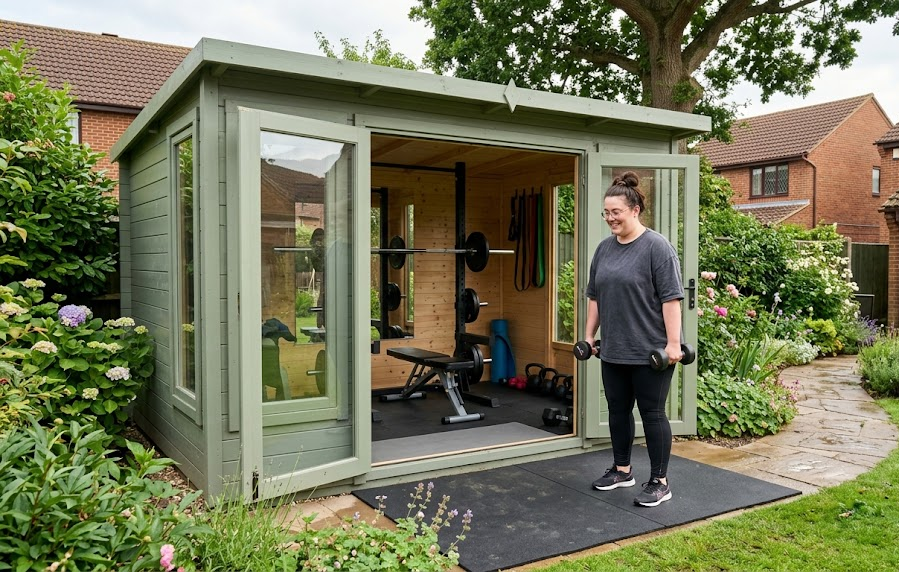

Creating a home gym can be difficult if you have limited space. A spare room might also serve as an office, the garage could be full of storage, and the living room may not be suitable for workouts. Finding a dedicated area for exercise is a common challenge.
According to UK active, fitness membership in the UK has reached a record of 12.2 mn, representing 18% of all adults over 16. This high demand makes it more important than ever to have a reliable and accessible place to train.
A fitness shed solves this problem by providing a dedicated space for exercise. This setup allows you to train without messing up your home. It offers a private, accessible environment that remains always ready for your workout whenever you need it.
At Fitpath, we specialise in tailored personal training and focus on your unique health goals in Dartford.
Why a Fitness Shed Works
Working out at a commercial gym can involve waiting in lines, commuting, and dealing with closing times. A home gym removes these issues. However, fitting barbells and a bench into your living room can create a new challenge.
A fitness shed sits outside your home. It keeps your workout space separate from your living space. That boundary matters more than people expect. Home gym ownership across the UK has grown steadily over the past few years, and outdoor fitness spaces are now one of the most popular uses for garden structures.
The Psychology of a Dedicated Space
Walking into a room designed for exercise helps you focus. There are no distractions, no notifications, and no one asking about dinner.
A 2025/26 PureGym report found that 35% of regular exercisers feel happier, and 30% notice a general improvement in their mood. Having a dedicated space that encourages regular exercise directly contributes to these positive outcomes.
A training area signals to your brain that it’s time to work out. This change in mindset is a key factor in maintaining your training over time. The environment plays an important role in building this habit.
How to Plan Your Fitness Shed
Planning properly saves you money and stress. It is best to start with the basics before picking your equipment.
Space and Size
Carefully measure your garden area. A space of about 4’ x 4’ is enough for a barbell, a bench, and room to move. Smaller sheds work perfectly for cardio equipment or even bodyweight training.
Flooring
Regular floors aren’t designed to support much weight. Using rubber mats can help protect the floor and your joints when you are moving around. Interlocking rubber tiles are also budget-friendly and easy to put together.
Ventilation and Lighting
Training in a hot shed during summer can be uncomfortable. To improve airflow, use roof vents or a window on the opposite wall. Good lighting is important too; add strip lighting for morning or evening training to boost mood.
Storage
Messy areas can feel disorganised and stressful. Using wall shelves or hooks to store weights, exercise bands, and other equipment can help keep the floor tidy, making the room feel more spacious and inviting.
To help you picture it, here is a helpful guide that walks through a real garden gym setup and how to make the most of your layout:
Choosing the Right Structure
Before choosing equipment, it’s worth thinking about the structure itself. A dedicated workout space can help separate exercise from daily home life and make training feel more purposeful.
Garden sheds from Surrey Hills Garden Buildings act as a dedicated fitness space that can help create a clearer boundary between home life and training time, which makes it easier to stick to a regular exercise routine.
Choose a space with good insulation, a secure door, and even enough ceiling height for overhead movements. A 7’ internal height is the minimum for most exercises. If you plan on pull-ups or overhead pressing, aim higher.
Equipment Worth Prioritising
Start with simple equipment. A barbell, adjustable dumbbells, and a flat bench allow for a wide range of exercises. Add a pull-up bar and some resistance bands, and you can meet most training goals.
For cardio, consider a rowing machine or an air bike. Both are compact and provide a strong workout without taking up too much space.
Choose quality over quantity. Cheap equipment can break or even wobble, which can be frustrating. It is better to spend more on the pieces you will use the most.
For a clearer starting point, take a look at this guide to the best home gym equipment, which helps narrow down the right kit based on your goals and available space.
Conclusion
A fitness shed gives you a private space to train without bothering anyone at home. This investment helps you build better habits and train consistently in your own space.
Choose the right structure, plan your layout carefully, and create a gym tailored to your goals.If you have any questions or need to book for a consultation about fitness, contact us at Fitpath.

